

Soaring broadcast deals for leagues are leading to massive costs for networks, which are then passing those costs on to cable and satellite providers with hikes in their per-subscriber fees. Unsurprisingly, the cable and satellite providers are now trying to pass some of those costs onto consumers by increasing what they’re charging for their packages, and they’re citing sports as a key reason why
The latest
- Could NFL see next Saudi sportswashing controversy?
- ESPN and NBA have reportedly ‘essentially come to terms’ on deal that would keep Finals on ABC
- G/O Media sells The Onion to ‘Global Tetrahedron,’ ex-NBC reporter Ben Collins to serve as CEO
- Eli Gold on Alabama exit: ‘You can’t argue with city hall.’
Comcast has confirmed to TVPredictions.com that it will increase Internet and video prices by an average of 3.8% nationally, starting as early as January 1 in some markets.
…Jenni Moyer, a Comcast spokesperson, confirmed to TVPredictions.com today that the cable operator is now notifying customers about the price changes. She added that the effective date of the increases will vary by market, but some areas will begin to see price hikes as early as January 1.
“We continue to make investments in our network and technology to give customers more for their money — like faster Internet service and more WiFi hotspots, more video across viewing screens, better technology like X1 and a better customer experience,” Comcast said in a statement submitted to TVPredictions.com. “Unfortunately, the costs we are charged to carry popular networks continue to increase significantly, especially broadcast television and sports programming, which are the largest drivers of increases in price adjustments. On average, nationally, the customer bill will increase by 3.8% in 2017, less than half the projected increase in our programming costs.”
This isn’t all about national sports networks like ESPN and FS1, either, as there are also rising costs for broadcast television (which has its own rising sports rights deals, especially for the NFL) and for regional sports networks. Swann writes that Comcast is set to boost its monthly “Broadcast TV Fee” from $5 to $7 in several markets, and its regional sports fee from $3 to $5.
Packages are rising overall, too; AA has seen the increased package pricing for one area, which has seen all Double Play packages rise by $5 a month and most internet packages also rise by $5. For cheaper packages like the Internet Plus Double Play (rising from $77.95 to $82.95), the increase is actually over six per cent.
It’s important to note that this isn’t new (Swann previously wrote that “Comcast has raised prices by anywhere from 3-7 percent every year for the past several years”) and that Comcast isn’t alone here. Most TV providers have raised prices each year, and DirecTV has already indicated they’ll be raising their own prices by $2 to $6 a month in January, also citing increased programming costs. Cable bills have more than tripled since 1998, even after adjusting for inflation. Here’s a graphic showing that from a 2014 International Business Times story:
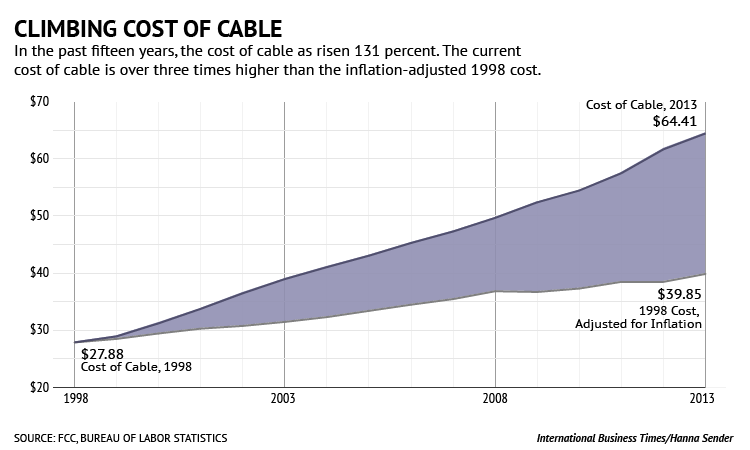
As the material above shows, things haven’t slowed down at all since then. However, the alternatives to cable are expanding, and the growing numbers of streaming services (albeit with their own problems) may look more and more appealing if cable and satellite costs keep rising. Or there may be more people who decide that pay TV of any sort, in a traditional bundle or through a streaming service, is no longer worth it.
That illustrates a further challenge for sports networks. Landing more sports rights helps them raise their per-subscriber fee in future negotiations, and there aren’t many distributors willing to risk losing big sports networks, so they can get away with charging a premium. However, if the distributors keep passing those costs on to consumers, that may lead to less consumers, which leads to less subscribers, less per-subscriber fees and lower ratings (so less advertising money). Meanwhile, the costs just keep going up. It all leads to a massive bottom-line challenge, and one that will just keep growing as long as rights fees keep rising.


Comments are closed.