


September 25, 2026 represents the 20th anniversary of one of the most impactful sporting events of the 21st century. Twenty years ago, the New Orleans Saints reopened the Superdome on ESPN’s Monday Night Football against the arch-rival Atlanta Falcons. It was the first game the Saints played in New Orleans following the devastation of Hurricane Katrina, and it was unlike any regular-season NFL game played before or since.
The game’s legacy goes beyond any normal football game. A little over a year earlier, the Superdome stood as a mass shelter and last place of refuge for thousands of citizens during a catastrophic disaster. But that night in New Orleans, tears of sorrow turned to tears of joy as the city, the region, and the watching world saw a reason to believe.
To commemorate the 20th anniversary of the Domecoming game, Awful Announcing spoke with seven people who were there in the Superdome to share their memories of a night that will live forever.
Mike Tirico, ESPN Monday Night Football announcer, currently with NBC Sports.
Suzy Kolber, ESPN Monday Night Football sideline reporter, currently with Scripps.
Deuce McAllister, New Orleans Saints Pro Bowl running back, currently the Saints radio analyst.
Roman Harper, New Orleans Saints Pro Bowl safety, currently an SEC Network analyst.
Jeff Duncan, New Orleans Times-Picayune columnist.
Fletcher Mackel, WDSU New Orleans sports anchor.
Tim Fletcher, KTBS Shreveport sports anchor, currently host of The Tim Fletcher Show on KWKH Shreveport.
I. “Dude, you guys are going to suck, but congratulations.”
Heading into the Monday Night game against the Falcons, the Saints were coming off a 3-13 season in 2005, when they were displaced, splitting home games between San Antonio and Baton Rouge, even playing one against the Giants in Giants Stadium. The 2006 season wasn’t just the Saints’ return to New Orleans, but the start of a new era with Sean Payton as head coach and Drew Brees as quarterback. But nothing around the team or the city was certain.
Fletcher Mackel: I lived at the station for 37 days. It was unbelievable. 80% of the city is underwater, and everybody was affected by this, and most of us lost our homes and everything in some way. So not only were we reporting on it every day, but you’re living it every day too.
We had a mayor’s race in February right after the storm. And our station broadcast, they did it nationally — a mayor’s debate with Chris Matthews hosting it on MSNBC. And one of the big questions is, why should we give all this money to you all? Like, why is New Orleans important? Why do you all deserve this money from the federal government? That leads to a lot of anxiety for people.
Deuce McAllister: 2005 was hard. It was hard for a lot of different reasons. Our first home game in ’05 was up in New York against the Giants. The NFL tried to do as best as possible for us as far as the team and organization, but they didn’t even have an idea how things would go or what were the next steps. There was no game plan for a franchise being completely displaced. There’s never been a situation where you had to move a complete organization for a year with the backdrop and possibility of them not ever returning.
Tim Fletcher: They were going to be the San Antonio Saints, for Pete’s sake. If it wasn’t for what Lee Zurik and WWL doing with some hard-hitting questions of Tom Benson, they were going to move.
Fletcher Mackel: Nobody knew if Brees was going to be worth a shit. Nick Saban had just red-flagged him, and the Dolphins wouldn’t sign him. Green Bay passed on Sean Payton. Nobody knew if he was going to be any good. Nobody knew what this was.
Roman Harper: My college roommate, after I got drafted, called me and was like, dude, you guys are gonna suck, but congratulations. And I couldn’t be mad at him because the Saints had always stunk. I grew up in Alabama, and there was never any Saints to be around.
Jeff Duncan: They weren’t here for the preseason. They weren’t in New Orleans. They were over in Jackson, and they were playing these road games in the preseason. Then they opened up against the Browns and the Packers on the road. So I think that just heightened the level of excitement and anticipation that went into that night because the wait was even longer. There was a countdown sign on the side of the dome that was very recognizable, so all that built up.
Roman Harper: New Orleans was not ready to accept us back as far as training camp. There was no practice. The facility wasn’t all the way done and ready. We were in Millsaps in Jackson, Mississippi for like 6 or 8 weeks. It was awful. It was hot. There was nothing good about Millsaps besides the food. They called us the Junction Boys because of Bear Bryant down at Texas A&M.
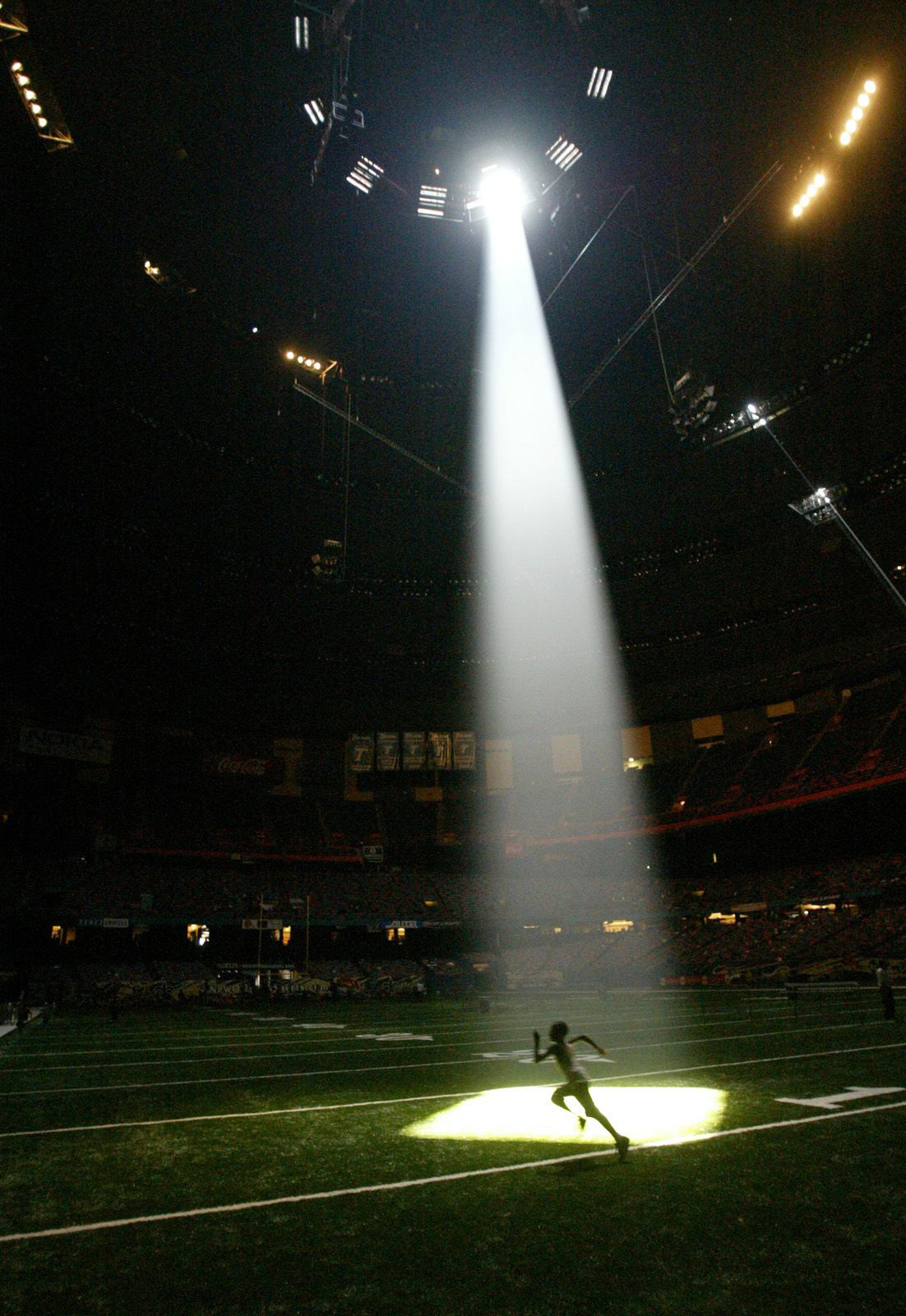
Tim Fletcher: We had several of our reporters from Shreveport, and news photographers in our satellite truck were down in New Orleans a lot during Katrina. And Tulane moved their football operations up to North Louisiana. And they shared football facilities with Louisiana Tech. Tulane had their first game in the Katrina year; they played over in Monroe at Malone Stadium. Somewhere there’s a tape of my live shot that I did for ESPN because it was the first actual New Orleans entity that was back in action, Tulane’s first college football game of that season.
The whole state was like a roux. Everything was just kind of being tossed in, and we were trying to stir it up and make something that could be used to help people just get through another day and have some normalcy.
Roman Harper: Of course I saw the tarps. I remember very vividly all the FEMA trailers, and that what it really meant to have Saints football because it was 3 hours or so away from the heartache and turmoil that people were going through on a day-to-day basis.
Mike Tirico: We did a bus tour of the Lower Ninth Ward. So you could see the devastation. That was during the weekend preparing for the game. So you got to see firsthand a year plus later how that area was completely wiped out.
Deuce McAllister: Whenever you rode around New Orleans or whenever you went to different places, you see the abandoned buildings, you see the abandoned houses, you see people living in the trailers. It was real. It was one of those images you will never forget. To this day, it still doesn’t hit you that a lot of people lost not only material things, but a lot of people lost lives.
II. “Whenever they struck the first note, I was crying.”
With the game taking place on Monday Night Football, the scene was unlike any other normal regular-season game. Former President George H.W. Bush tossed the coin. Both Paul Tagliabue and Roger Goodell were in attendance. And U2 and Green Day performed before the game, giving it a Super Bowl-like atmosphere.
Suzy Kolber: As I was in my preparation and reading, I see a name in the paper that I recognize. Marty Bahamonde. Odd name, right? Like, not common. And he is one of the top people with FEMA. And it turned out that he and I interned together at this station in Miami. And I reached out to him and got some just incredible insight he had. He had been in New Orleans before the storm, during, and after. He actually spent time living in the Superdome too.
Tim Fletcher: I remember getting down there early and it was weird that the city just, it just didn’t have the same kind of, what’s the phrase here? Je ne sais quoi. Buddy, when you get out of the vehicle in New Orleans, you know that you’re there. There’s a smell, there’s a vibe. It’s almost indescribable until you experience it. You like it, you can’t wait to get more of it, you know?
Fletcher Mackel: Hearst owns like 18% of ESPN. So we simulcast all the Monday night games. So for us, we treated it like Mardi Gras coverage that day. It was because the city literally closed. They declared it like a work holiday because it was truly such a big moment. This is a sign to the world that we’re back. We’re the oldest local station in New Orleans. We’re the first station on the Gulf Coast. We’ve been there for everything. We’re going to be the biggest at this. So it was, we’re coming on at noon, commercial-free, and we’re staying on for 7 hours until we hand it to ESPN.
Deuce McAllister: The one thing that I always remember, Coach Sean [Payton] just talking about was for three hours, we could take the minds of all of our fans off of dealing with an insurance agent, the blue tarps on their roof, having to gut their house out, thinking about the loved ones that they lost. For three hours, we got to take their mind off of that.
Roman Harper: Sean did a good job of bringing us there before the game, like on that Thursday or Friday practice, to kind of like get us used to it. The lights, what it looked like, what it felt like in there. It was supposedly new because they had to renovate it after Katrina.
But I’ll be honest with you, the one thing we all were concerned with that night was the valet parking. And it only lasted like a game or two, but this was the biggest problem. I’m telling you, guys were freaking pissed and were panicking because if they didn’t make the right turn in that tight garage with big rims, which were a big thing in early 2000s, was the bigger the better rims. Ask any player that had big rims at the time the one thing that they were super nervous about before the game, and they’d all tell you.
Deuce McAllister: The valet service was something new that we had never kind of really done, but we knew that with this game and what we wanted to accomplish just trying to change as well the perception of New Orleans, but yeah, the guys were not very pleased. That rim can’t hit that curb.
Tim Fletcher: We didn’t know what to expect. I didn’t know what to expect. I didn’t know if it was going to be morose. I didn’t know if it was going to be joyous. I didn’t know if it was going to be celebratory. I didn’t know if it was going to be traumatic. It was just— we knew something. And then it starts happening, and you realize, oh, this is going to be a redefinition of what overcoming looks like.
Suzy Kolber: When you go to a Super Bowl, even before the players arrive, there’s sort of this electricity that you feel in a stadium. And then when the players are there for their pregame warmups, it’s just different. It feels different. And it was just like that, a different level of energy.
Tim Fletcher: When do you go to a game and you’re walking around the stadium, and five hours before the game, there are people outside hugging and crying, tears of joy that they were back. You could tell that some of these people were season ticket holders for years that haven’t seen their seatmates in a year and didn’t know exactly what was going on with anybody because not everyone had numbers that you could share back in the days. You couldn’t just automatically pop over your contacts to somebody. So you could just see that people were reconnecting and it was extremely emotional.
Fletcher Mackel: It was a year of truly not knowing trying to figure it out and everybody with strong opinions. And on that night, it was like white, black, old, young, rich, poor. We like all stood face to face, hand in hand. You don’t want to romanticize it too much, but it’s hard not to. It was probably the first time in 13 months we all kind of looked at each other and said, okay, we’re one, and this team is the symbol of us.
Roman Harper: I think for the first time in my life, it was a place where I truly felt like I represented way more than just the people that shared the last name on the back of my jersey. You were playing for something bigger than yourself. We represented heartaches, like almost like an anti-government movement because people felt a certain way about Katrina and the lack of resources. The emotion in that building was different than probably what anybody had ever felt.
Jeff Duncan: They were letting in first responders who had worked in the post-Katrina recovery. They were the first ones through the doors. And I remember picking off a few of them and interviewing them, and some of them were crying. I remember there was an ambulance driver and a guy from the Coast Guard who flew a helicopter, who was a first responder and had done a lot of those airlifts off roofs. He was very emotional.
Mike Tirico: It didn’t feel like a regular season game for all the obvious reasons. And then all the trappings of U2, Green Day, the dignitaries that were there.
Tim Fletcher: And then all of a sudden I look and literally, if I reach my arm out, there’s Bono walking past, and then there’s Billy Joe walking past. And you’re like, holy shit. We all knew they were going to be there, but we didn’t know they were going to be walking around the field right beforehand.
Jeff Duncan: You don’t see U2 at a regular season NFL game. It just doesn’t happen. It was an incredibly emotional pregame with that music. The three songs they played were ‘When September Ends,’ which is a huge hit by Green Day. Then it went right into ‘The Saints Are Coming,’ which is that remake that they had. And then the third song was ‘Beautiful Day’ by U2. It’s just magical.
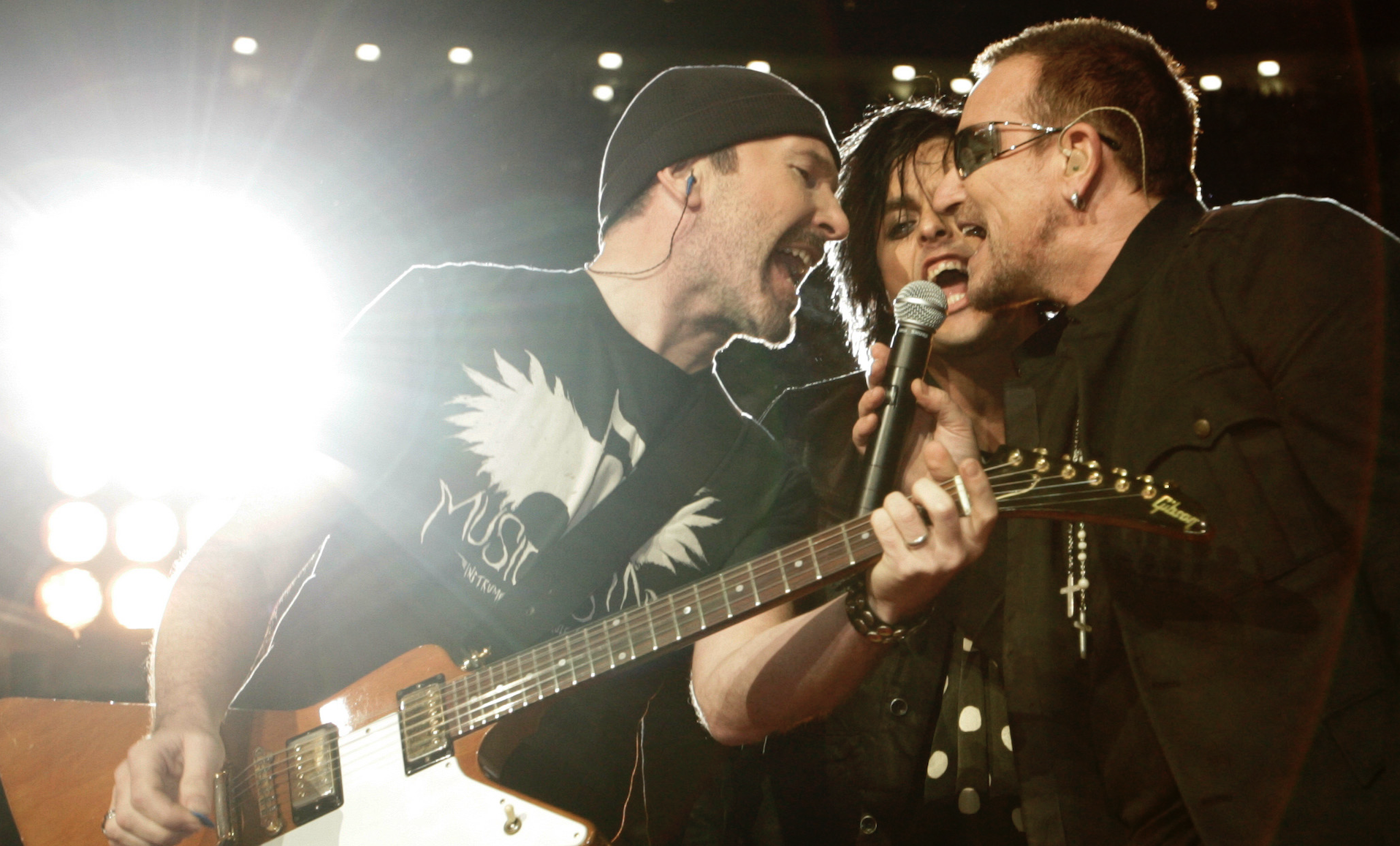
Fletcher Mackel: Right before the game, after our broadcast ended, when U2 and Green Day did The Saints Are Coming, that was kind of like, oh my God, just keep it together. I’m a professional, and I’m there for a job. But for a lot of us that were affected by Katrina, it’s a tough line to walk and balance. I’m still a born-and-raised seventh-generation New Orleanian who understands what this means.
Tim Fletcher: My God, whenever they struck the first note, I was crying. The first chord. Then Bono just starts singing, and then Billy, and you’re like, my gosh, the Saints can’t lose this game. They have to figure out a way to win this thing or this entire state is just going to collapse.
Mike Tirico: Tony Kornheiser would write these really terrific mini-essays and he would write them on yellow legal pads and would read them from his legal pad. It was really unique and cool because that’s what he did, right? And I remember looking into the crowd just at the people and seeing a joy. And I don’t know this to be certain, but you kind of got the sense that people who didn’t know each other felt like they knew each other that night in the stands. And when the first responders came out, tearing up as well. It was a really incredible stew of emotions all put together in one place.
Deuce McAllister: The pregame emotion, it was one where your head coach doesn’t have to come out and try to fire you up. He doesn’t have to come out with this motivational speech to make sure that my team is ready to play from an emotional standpoint. It was more so of a calming aspect where, hey, I got to make sure that these guys aren’t ready to just run through walls; they can actually execute.
Roman Harper: To be honest with you, I was just excited that I was playing against Michael Vick. That was the guy. I didn’t really think about all the stuff that was going on and what the moment was. I was just too young and just too immature to even grasp all that. I look back now, I can’t believe I was actually there for that. Because it’s not just a New Orleans thing; it was actually like an NFL moment. I was just a 22, 23-year-old rookie. I had no idea what I was actually living in.
III. “It just felt like divine intervention.”
As for the game itself, the Saints faced a tough challenge in Michael Vick and the Atlanta Falcons, a team that was in the NFC Championship Game two seasons prior. But nobody could have been prepared for the history about to unfold on the fourth play of the game, thanks to a little-known special teams ace named Steve Gleason. He blocked a Michael Koenen punt, and Curtis Deloatch recovered it in the end zone for a touchdown in one of the most iconic plays in NFL history.
Jeff Duncan: There was a buzz in the stadium. They kick off, 3-and-out. There’s a fumble on the 3rd down play that almost got returned by the Saints. So there was excitement about that. I’ve covered a lot of games in my career. Punt blocks usually do not happen 90 seconds in.
Deuce McAllister: You’re on the sideline, normally stretching and watching. Most of the time you’re not even paying attention. But you’re looking at it and they get the perfect look. Steve had been a special teams guy. He played defense; he was a safety. But he knew what he saw. So for him to be able to make that loop and to be able to come around and he’s free, all you hear, I’ll never forget it, it’s just like a loud thud.
Roman Harper: I was on the sidelines. My man Peanut Tillman always picks on me because I was not a huge special teams guy in my career. You know the classic football sound that you never want to hear? If you’re punting, the classic double thud. And all of a sudden you just can’t believe it because you practice these punt blocks but they never really work, right?
Jeff Duncan: It was like a bomb detonating.
Deuce McAllister: You could probably go and check with the National Weather Service, but I could guarantee you on the Richter scale, it ranked really, really high.
Fletcher Mackel: The game was over at that moment.
No. 28: @SteveGleason’s punt block @Saints (Sept. 25, 2006) #NFL100
📺: NFL 100 Greatest Plays on @NFLNetwork pic.twitter.com/bTa5WEJUC2
— NFL (@NFL) September 21, 2019
Roman Harper: Steve Gleason was our special teams captain, and they had implemented this block where he was going to be the guy set up for the opportunity to get the block, and it worked perfectly. For it to happen that fast in the game, you just can’t plan those things. And then to see Curtis Deloatch, who I’ve seen the last couple of years, be able to scoop it up, fall on it, and then do his patented reverse backhanded dunk on the 10-foot goal. But ultimately, that’s just one touchdown. You still got to go and play the game.
Tim Fletcher: I wanted to shoot as good as some of our really, really good photographers we had. So I made a decision at some point — anytime there’s a kick, whether there’s a field goal kick or a punt or anything like that, everyone tries to follow the ball after it goes off the foot of the kicker. What’s the good of following a football when it’s 35 feet in the air, and nothing can affect it? As soon as he blocked it, I was frozen on the punt, and I saw that it was blocked. And that’s when I swing the camera over and we get the touchdown and it’s to my right. And then they run through, and of course I’m on the side of the goalpost toward the Saints sideline, so they start running over towards me. And it was just electric. Your whole body kind of turns to jelly. There’s no way this is real.
Suzy Kolber: I’m pretty sure I was still probably around the 25-yard line toward that end zone, and it just happened so fast. When you’re in a live broadcast, everything feels like it’s all sped up anyway. Which makes what Mike does so amazing because he has a way of slowing everything down for the viewer. I think for me it felt so fast and chaotic; you almost couldn’t process what just happened. When you thought it couldn’t get any louder, like reach another decibel level, it did.
Mike Tirico: My last few years at ESPN and ABC, I was calling two college football games a week. I was doing Thursday and Saturday. So to go from that to 53-man rosters was a piece of cake. So you just knew the whole roster top to bottom. And sometimes you get lucky, and you get the right angle without bodies in the way, and you can see numbers. And for both of those players, they were right in front of it. The angle to see them was perfect.
Fletcher Mackel: I remember even in the press box, it was loud and emotional. And I remember I saw Stan Verrett and Rachel Nichols sitting down. And I actually kind of felt almost embarrassed because I started to well up a little bit. Like, I can’t believe this is happening. I’m in the press box, and I’m a professional. There is no cheering, but like, you just can’t help it. You’re a human, and you know what everyone has been through, including yourself and your family.
Mike Tirico: I try really hard not to script a call, but in my mind that whole week I knew if the Saints scored, it was going to be super loud. And I wanted to say the right thing. And I did commit to when the Saints scored first, I was going to say “Touchdown New Orleans.” Because the whole game was about the city. It wasn’t about the football team.
Tim Fletcher: After they get to the sidelines, we’re all shooting and we shoot the extra point. And then all the photographers were just over there high-fiving. You’re not supposed to do that stuff, you know.
Mike Tirico: And then what I don’t do very often at all, because I like the booth to be organic, is I made sure I put out my hand in front of Kornheiser especially, and Joe Theismann. Tony had only done two football games before that. There was nothing that we could say, not one word that could be said that could match that crowd at that moment.
Fletcher Mackel: The roof blew off the place on the fourth play of the game. We go through all these emotions, and literally everything is just off the charts. People are out drinking and partying all day. And the atmosphere is just amazing and electric. You get Green Day and U2, you get the national anthem, you get the pageantry of the president, the politicians, and the first responders. And there’s Gleason blocking it. And it was just like the timing of it even worked out perfectly.
Deuce McAllister: It’s pure joy. It is pure emotional. I don’t think the focus was, hey, this is still a long game at this point. It’s almost like there’s no way that you’re gonna lose this game.
Roman Harper: I’m friends with Michael Vick now. And his wife told me when she found out when I was in that game on the other side, she said, literally, that’s the first and only game I’ve ever been to where I was like, I don’t think Mike and them have a chance at all.
Suzy Kolber: It just felt like divine intervention, like we just want you to know that from the get-go in this game, we got it. We’re coming back. We are in control. We’re all together. It was just something that, if there wasn’t a feeling of everybody being united already, that just solidified it in the moment.
Tim Fletcher: It’s a very Catholic city, but there’s some people who are having their most religious experience in their lives right now. I guarantee if you poll people who are leaving that stadium right then, does God exist? 100%. You would have gotten 100% yes, because that’s the only way you can explain it.

About Matt Yoder